
Al elegir una bañera, muchos propietarios suelen centrarse en las dimensiones básicas como el largo, el ancho y la altura. Este es un buen punto de partida, ya que influye directamente en cómo encajará la bañera en el baño. Sin embargo, otro factor crucial que a menudo se pasa por alto es la profundidad . La profundidad de una bañera no solo afecta la comodidad del baño, sino que también influye directamente en la retención de la temperatura del agua y en la experiencia general del baño. Entonces, ¿cuál es exactamente la profundidad de una bañera y cómo se debe medir y elegir? En este artículo, Giving Tree Home responderá a estas preguntas para ayudarle a tomar una decisión más informada al comprar una bañera.
¿Qué es la profundidad de remojo y cómo medirla?
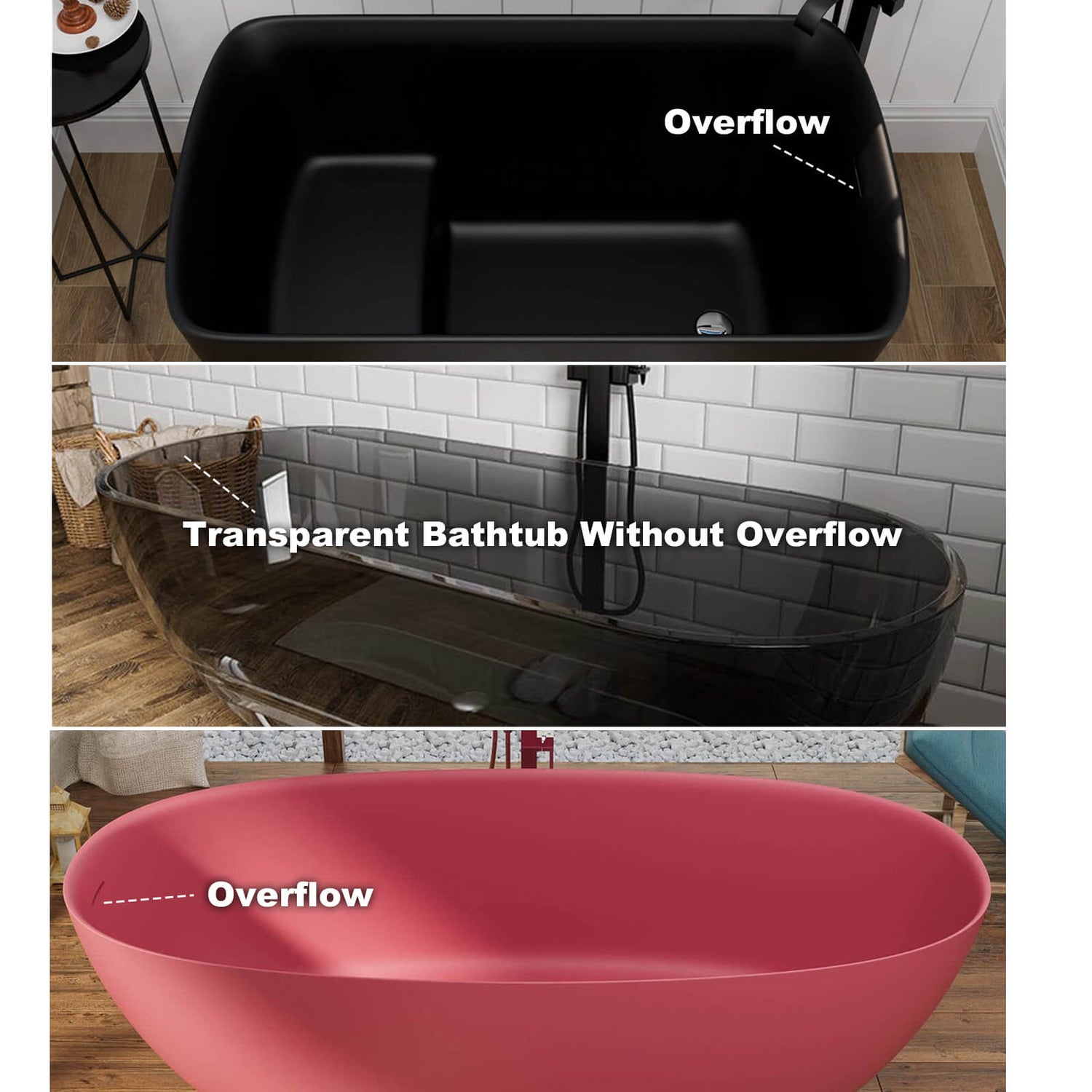
La profundidad de inmersión de una bañera se refiere a la distancia vertical desde el fondo de la bañera hasta el nivel máximo del agua . En la mayoría de las bañeras, este nivel máximo de agua suele estar marcado por el desagüe de rebosadero; en el caso de las bañeras transparentes , es el borde superior, ya que estas normalmente no tienen desagüe de rebosadero.
Para medir la profundidad de inmersión, puede usar una cinta métrica para determinar la distancia desde el fondo de la bañera hasta el desagüe de rebosadero (o el borde superior). Es importante tener en cuenta que, si planea comprar una bañera con asiento , asegúrese de confirmar si la profundidad de inmersión indicada se refiere a la distancia desde el asiento hasta el desagüe de rebosadero o desde el fondo de la bañera hasta el desagüe de rebosadero. En Giving Tree Home, la profundidad de inmersión que proporcionamos se mide desde el fondo interior de la bañera hasta el desagüe de rebosadero.
Profundidad de inmersión estándar en bañera
| Aspect | Alcove Bathtub | Freestanding Bathtub | Soaking Bathtub | Sitting Bathtub |
|---|---|---|---|---|
| Definition | Installed against three walls, often featuring a built-in shower. | Freestanding without being attached to the wall. | Style with greater soaking depth, designed for deep immersion. | Built-in seats allow users to soak while sitting. |
| Standard Soaking Depth | 12"-16" | 13"-18" | More than 15" | 16"-22" |
| Installation Space | Ideal for small bathrooms, saves space. | Requires larger space, flexible in placement. | Needs more space, may require reinforced flooring. | Occupies less space, good for compact bathrooms. |
| Material Options | Acrylic, cast iron, enameled steel. | Acrylic, copper, stainless steel, stone. | Acrylic, cast iron, composite materials. | Acrylic, ceramic. |
| Advantages | Affordable, space-saving, functional for quick showers. | Flexible placement, versatile design, fits various decor styles. | Offers a therapeutic experience with deep immersion. | Great for seniors or those preferring to sit while soaking. |
| Disadvantages | Limited soaking depth, suitable for basic bathing needs. | Higher installation cost, requires more space. | Higher price range, occupies more floor space. | May not be in harmony with the large bathroom space. |
| Maintenance Needs | Easy to maintain, simple to clean. | Moderate maintenance, depends on material. | Requires regular cleaning and upkeep for longevity. | Low maintenance, suitable for daily use. |
| Suitable For | Small homes, renters, budget-conscious buyers. | Homeowners seeking unique design, larger bathrooms. | Those looking for a deep soaking, spa-like experience. | Seniors, people with limited mobility, or fans of sitting baths. |
| Recommended Settings | Compact bathrooms, rental apartments. | Master bathrooms, standalone bath spaces. | Luxury bathrooms, home spas. | Secondary bathrooms, elderly-friendly spaces. |
| Price Range | $300 - $1000 | $600 - $3000 | $600 - $2500 | $700 - $1500 |
Cómo elegir la profundidad de remojo adecuada
Height
The soaking depth determines how much of your body will be submerged in the water during the bath. This coverage will vary depending on the user's body type. To achieve a better soaking experience, the bathtub should be deep enough to cover most of the user's body, including the shoulder area, during the bath.
- For taller individuals: If you are over 6 feet tall, a soaking depth of around 15 inches is ideal. Additionally, pay attention to the length of the tub to ensure you can lie down comfortably.
- For shorter individuals: Shorter people may prefer a shallower tub, as an excessively deep tub can feel uncomfortable, especially if the water level reaches just below the neck, which might feel too deep.
Soaking Duration
The soaking depth is often directly proportional to the water capacity of the bathtub. More water capacity means better heat retention. If you enjoy soaking for a long time in warm water, a deeper tub might be more suitable for you.
However, some homeowners might be concerned that increased water capacity could lead to higher water bills. Is there a way to balance water conservation with prolonged soaking? Opting for an acrylic bathtub could be a good idea. Due to its manufacturing process, acrylic bathtubs feature a hollow insulation layer, which helps retain water temperature. Even in bathtubs with a shallower soaking depth, you can enjoy a prolonged soak without worrying about significant temperature drops. In fact, the water temperature only decreases by about 20 degrees over a 50-minute period, making it an excellent choice for long soaks.
Bathtub Types
Different types of bathtubs offer various depth options. The main categories include traditional bathtubs, soaking tubs, and Ofuro bathtubs, each with its specific design and suitable depth range.
- Traditional bathtubs: Generally have a depth of 13-15 inches, making them suitable for everyday use and basic cleaning during baths.
- Soaking tubs: These typically have a depth of 15 inches or more and are designed specifically for deep soaking, perfect for those who want to enjoy a full-body soak and relaxation.
- Ofuro bathtubs: A type of Japanese wooden bathtub, usually round and relatively small, with soaking depths that often exceed 24 inches. It's worth noting that the purpose of an Ofuro is for therapeutic soaking rather than bathing, so it is not recommended to use soap or other bathing products while soaking in it.
Final
Al elegir una bañera, es fundamental considerar factores como tu complexión, tus preferencias de inmersión y el espacio disponible en el baño. Al comprender y tener en cuenta la profundidad de inmersión, puedes mejorar tu experiencia de baño y elegir la bañera que mejor se adapte a tus necesidades.
Más ideas
-

How to Choose a Medicine Cabinet: A Complete Buying Guide
Is your bathroom vanity counter crowded with toothpaste, skincare products, and other daily essentials? Maybe your current medicine cabinet doesn’t have enough room for everything you need. A well-chosen medicine...
-

10 Modern Bathroom Design Ideas for a Spa-Like Retreat
The bathroom is one of the few spaces in the home that can be restorative. The right materials, fittings, and finishes can turn a merely functional room into a spa-inspired...
-

How Private Is a Transparent Bathtub? Factors That Affect Privacy
A transparent bathtub can be a striking addition to a bathroom, especially if you like a light, open look. But one practical question may come up before you buy: How...
-

How to Clean and Maintain a Transparent Bathtub
A transparent bathtub can add a distinctive look to a bathroom with its clear, translucent, or tinted appearance. However, many homeowners wonder whether this type of bathtub requires more maintenance...
-

Transparent Resin Bathtub Guide: How to Choose the Right One
The appeal of a transparent resin bathtub comes from the way it interacts with light and its surroundings, creating a unique look that stands out in the bathroom. However, choosing...
-

What Is a Transparent Bathtub and Is It Worth Buying?
As homeowners look for more distinctive ways to update their bathrooms, bathtubs are increasingly becoming part of the room's overall design rather than simply a functional fixture. Clear, translucent, and...


