
En el diseño de baños modernos, los tocadores no solo son elementos funcionales, sino también piezas clave de la estética del espacio. Por lo tanto, elegir el material adecuado para la encimera es fundamental. Sin embargo, muchos usuarios suelen tener problemas con diversos materiales, como arañazos, manchas o fragilidad, lo que puede resultar preocupante. Estos inconvenientes exigen que los consumidores sean especialmente cuidadosos al seleccionar encimeras. Entre las muchas opciones, las encimeras de cerámica destacan por su aspecto liso y brillante, así como por su durabilidad, lo que las convierte en una opción popular para muchos propietarios. Pero, ¿seguir la tendencia es la mejor decisión? En este artículo, analizaremos las ventajas y desventajas de las encimeras de cerámica para ayudarle a tomar una decisión más informada.
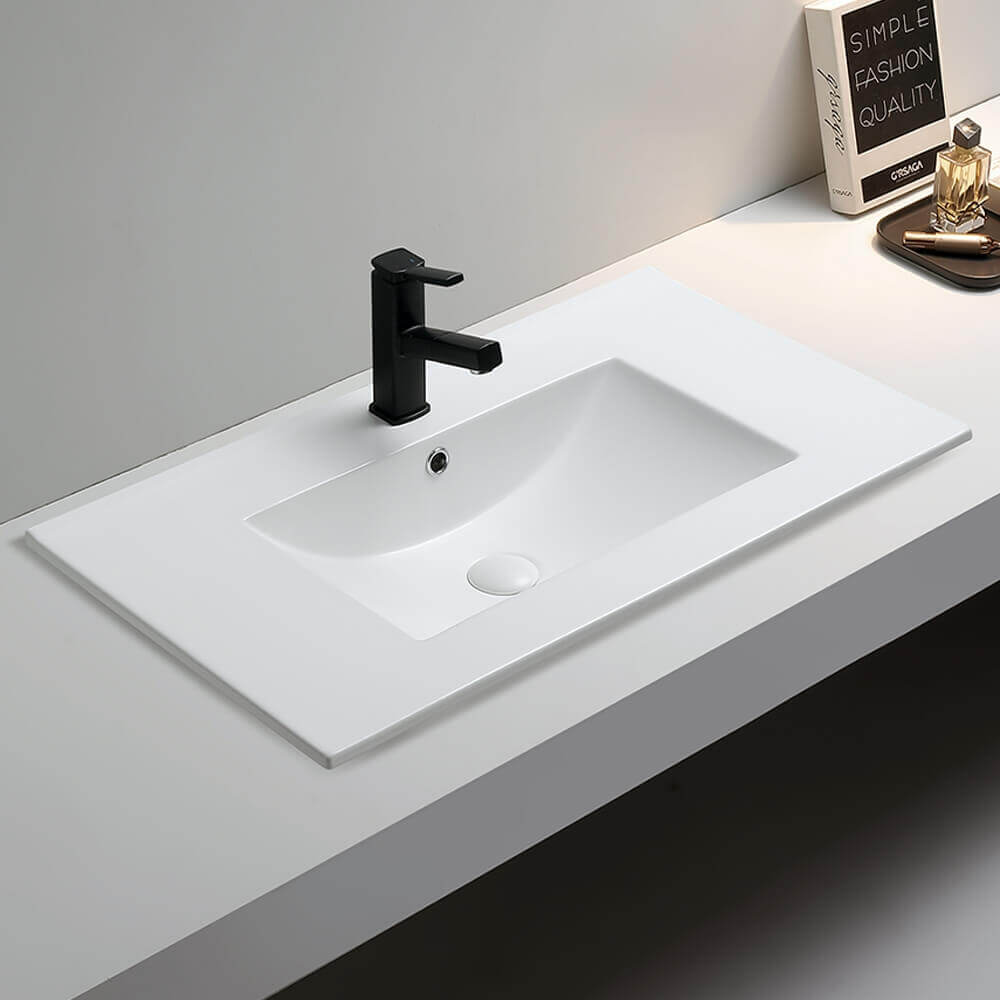
Introducción a los materiales cerámicos
La cerámica es un material elaborado a partir de diversos minerales naturales, como arcilla, cuarzo y feldespato, que se procesan y cuecen a altas temperaturas. Las materias primas se mezclan cuidadosamente, se combinan con agua y otros aditivos, y se moldean hasta obtener una pasta homogénea. Esta pasta se cuece a temperaturas cercanas a los 1200 °C para endurecerla, dando como resultado un material cerámico duradero.
Según el proceso de producción y las materias primas utilizadas, los productos cerámicos se pueden clasificar en varios tipos, entre los que se incluyen la porcelana, la porcelana vitrificada y la arcilla refractaria.
- Porcelana: Un material cerámico denso y no poroso, naturalmente impermeable, comúnmente utilizado para artículos cotidianos como vajilla y accesorios de baño. Es resistente al desgaste, a la corrosión y fácil de limpiar.
- Porcelana vitrificada: Una versión más refinada de la porcelana, con un esmalte de vidrio aplicado a la superficie para crear un acabado liso y duradero. Ofrece una excelente resistencia a las manchas y al desgaste, lo que la hace ideal para lavabos y encimeras.
- Arcilla refractaria: Cerámica especialmente tratada con alta resistencia al calor y gran solidez, comúnmente utilizada en productos de alta gama como estufas y equipos resistentes al calor. Su tolerancia al calor la convierte en un material valioso para aplicaciones industriales y de construcción.
Ventajas y desventajas de las encimeras de cerámica para tocadores
Pros
- Durability
Ceramic is known for its remarkable hardness and strength due to the high-temperature firing process. It can withstand daily impacts, scratches, and wear without losing its shape. Whether you're washing, cleaning, or placing everyday items on the vanity, ceramic countertops will maintain their integrity, with minimal risk of warping or damage over time.
- Water Resistance
Bathrooms are typically damp environments, and ceramic's non-porous nature makes it highly water-resistant. It effectively repels moisture, preventing water stains and the penetration of liquids. This helps avoid damage caused by moisture, such as the aging or warping of the surface, especially in the humid bathroom environment.
- Ease of Cleaning and Maintenance
Ceramic surfaces are smooth and non-porous, which means dirt and water stains don't easily adhere to them, making cleaning a breeze. Most ceramic vanity tops only require a simple wipe with a damp cloth to restore their shine. Compared to other materials, ceramic requires minimal special maintenance, making daily upkeep much easier.
- Stain Resistance
Thanks to its smooth, dense surface, ceramic is highly resistant to common stains from soap, toothpaste, and cosmetics. This ensures that the countertop stays clean and visually appealing, making it an excellent choice for frequently used bathroom areas.
Cons
- Brittleness
While ceramic is hard, it is also brittle. A heavy impact or a dropped object may cause the countertop to crack or break, especially at the corners or weaker points. Therefore, it is important to handle ceramic surfaces carefully to prevent damage from falling objects.
- Temperature Sensitivity
Some ceramic vanity tops may be sensitive to temperature fluctuations due to manufacturing processes or material inconsistencies. Extreme temperatures, such as pouring hot water onto a cold surface, can lead to cracks or surface damage. It's important to avoid subjecting the countertop to sudden temperature changes.
- Heavy Weight
Ceramic is a strong and durable material, but it is relatively heavy. If you are purchasing a countertop and cabinet separately, ensure the base cabinet can support the weight of the ceramic countertop to avoid instability during installation.
Comparación de encimeras de cerámica para tocador frente a encimeras de resina y mármol para tocador
| Comparison | Ceramic | Resin | Marble |
|---|---|---|---|
| Durability | High: Scratch, stain, and heat-resistant, ideal for daily use. | Medium: Fairly sturdy but scratches and stains easily; less durable than ceramic. | High: Natural stone, very hard and durable, but may crack or wear over time. |
| Waterproofing | Excellent: Non-absorbent, ideal for bathroom use. | Medium: Waterproof surface, but cracks or scratches may lead to water penetration. | Poor: Natural stone may allow water penetration if porous, requiring regular sealing. |
| Cleaning and Maintenance | Easy to clean: Smooth surface, simple to maintain. | Easy to clean, but surface scratches can accumulate stains. | Difficult to clean: Requires regular care, especially waxing and sealing to prevent stains. |
| Design Appearance | Classic: Smooth surface with various color options, suitable for all bathroom styles. | Modern: Highly customizable in terms of shapes and colors, giving a modern look. | Luxurious: Unique natural marble patterns, providing a high-end, luxurious appearance. |
| Price | Moderate: Relatively affordable, offering good value for money. | Lower: More affordable than natural stone but depends on resin quality. | High: Natural marble is usually expensive, suited for high-end designs. |
| Weight | Moderate: Relatively lightweight, easy to install. | Light: Lighter than marble and ceramic, easier to install. | Heavy: Requires extra support during installation, increasing transportation and installation costs. |
| Heat Resistance | High: Can withstand high temperatures, suitable for hot water use. | Low: Prolonged heat exposure may damage the surface. | High: Natural marble is heat-resistant, withstanding contact with hot objects. |
| Stain Resistance | Very good: Smooth surface, stains are easy to remove. | Medium: Surface can stain, especially with dark or oily substances. | Good: Natural stone resists stains but may show oil stains; regular maintenance is needed. |
| Suitable for | Ideal for general home bathrooms, compatible with various styles, and cost-effective. | Suitable for modern, minimalist bathrooms, especially for custom needs. | Suitable for luxury bathrooms or high-end hotels, highlighting opulence and uniqueness. |
Final
Tras analizar las ventajas y desventajas de las encimeras de cerámica para el baño, podrá decidir si la cerámica es el material adecuado para su baño. Si cree que una encimera de cerámica es la opción ideal, elegir Giving Tree Home es una decisión inteligente y satisfactoria. Ofrecemos una amplia gama de muebles de baño con encimeras de cerámica y estaremos encantados de ofrecerle encimeras individuales según sus necesidades. Como expertos en mobiliario de baño, flexibles y de confianza, en Giving Tree Home nos dedicamos a brindarle productos de alta calidad y una experiencia de compra sin preocupaciones.


Más ideas
-

10 Modern Bathroom Design Ideas for a Spa-Like Retreat
The bathroom is one of the few spaces in the home that can be restorative. The right materials, fittings, and finishes can turn a merely functional room into a spa-inspired...
-

How Private Is a Transparent Bathtub? Factors That Affect Privacy
A transparent bathtub can be a striking addition to a bathroom, especially if you like a light, open look. But one practical question may come up before you buy: How...
-

How to Clean and Maintain a Transparent Bathtub
A transparent bathtub can add a distinctive look to a bathroom with its clear, translucent, or tinted appearance. However, many homeowners wonder whether this type of bathtub requires more maintenance...
-

Transparent Resin Bathtub Guide: How to Choose the Right One
The appeal of a transparent resin bathtub comes from the way it interacts with light and its surroundings, creating a unique look that stands out in the bathroom. However, choosing...
-

What Is a Transparent Bathtub and Is It Worth Buying?
As homeowners look for more distinctive ways to update their bathrooms, bathtubs are increasingly becoming part of the room's overall design rather than simply a functional fixture. Clear, translucent, and...
-

Features That Make a Kitchen Faucet Worth Buying
Short answer: The key features that make a kitchen faucet worth buying include spray pattern options, tall spout height and reach, finish durability, water efficiency, sensor and touch technology, solid...


