
El acrílico es un material popular para bañeras, apreciado por su precio asequible y su superficie cálida y confortable. Sin embargo, a muchos propietarios les preocupa que su apariencia "plástica" reduzca su vida útil. De hecho, con el cuidado adecuado, una bañera de acrílico puede durar entre 10 y 15 años. Para disipar sus dudas, este artículo le explicará las características de las bañeras de acrílico y le ofrecerá consejos de mantenimiento para ayudarle a prolongar su vida útil, garantizando que sigan siendo un excelente servicio en su baño durante años.
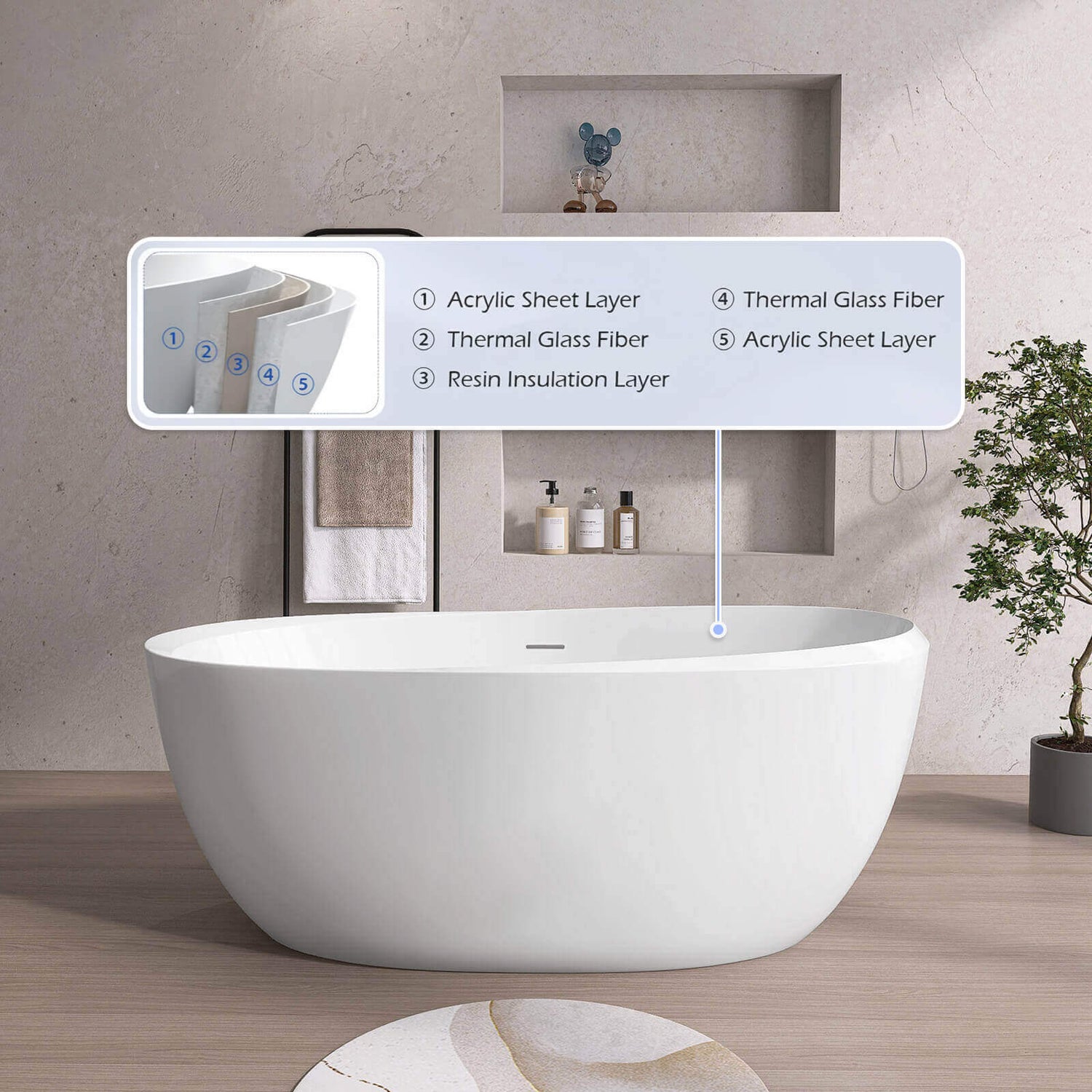
Desglose del material y la estructura de la bañera de acrílico
El acrílico, conocido científicamente como polimetilmetacrilato (PMMA), es un material versátil apreciado por su transparencia, durabilidad y facilidad de procesamiento. Se le conoce comúnmente como "vidrio orgánico" o "plástico transparente" y se utiliza en numerosas industrias, especialmente en la fabricación de bañeras.
Una bañera de acrílico se fabrica con láminas de acrílico que se calientan para ablandarlas y luego se moldean mediante un proceso de moldeo al vacío. A diferencia del moldeo por inyección, el proceso de vacío suele formar una estructura hueca, lo que la hace más ligera, más económica y mejor para retener el calor. Sin embargo, algunas personas creen erróneamente que esto reduce la durabilidad de la bañera.
Las bañeras de acrílico suelen tener un diseño multicapa, cada una con una función específica para garantizar comodidad, estabilidad y durabilidad. La capa exterior suele estar hecha de acrílico puro de 3 a 5 mm de espesor, lo que protege la bañera y realza su atractivo estético. Debajo de la capa exterior, se suelen añadir uno o más materiales de refuerzo para mejorar la resistencia de la bañera a la presión y los impactos, lo que ayuda a prevenir la deformación con el tiempo.
Las bañeras de acrílico de alta gama también pueden incorporar estructuras de soporte adicionales en la base, como refuerzos gruesos de fibra de vidrio o madera, para mejorar la estabilidad. Muchas de estas bañeras también contienen espuma o materiales aislantes para mejorar la retención del calor, lo que permite que la bañera mantenga la temperatura del agua durante más tiempo.
Factores que afectan la vida útil de las bañeras y soluciones acrílicas
Material Quality
The lifespan of an acrylic tub is closely tied to the quality of its material. High-quality acrylic materials are often treated to be more crack-resistant and durable, effectively preventing scratches, discoloration, or breakage over time. In contrast, lower-quality acrylic bathtubs may show signs of damage after just a few years, compromising both their appearance and functionality.
With so many acrylic tub brands on the market, it can be hard for consumers to judge which ones offer the best quality. To avoid unnecessary issues, Giving Tree Home recommends choosing reputable brands that specialize in acrylic tubs, ensuring you purchase a product that is reliable and durable.
Proper Usage
While acrylic tubs are quite durable, improper usage can significantly shorten their lifespan. For example, pouring water that is too hot directly into the tub can cause it to warp. The correct way to fill the tub is by adding some cold water first, followed by hot water, which helps prevent excessive temperature differences.
Additionally, impacts from blunt objects can cause scratches or even damage the surface. If scratches appear, they can usually be polished out, though this requires time and effort. More severe impacts could puncture the tub, meaning it will need to be replaced. To prevent this, keep metal items like keys or razors away from the bathtub to avoid accidental scratches or bumps.
Another common mistake is using harsh chemicals or inappropriate cleaners, which can damage the surface. To protect your bathtub, it’s best to use gentle cleaning methods, such as mild dish soap, white vinegar, or baking soda. For stubborn stains, consider using a cleaner specifically designed for acrylic tubs.
Installation Issues
Acrylic tubs are relatively lightweight, so some homeowners may attempt to install them themselves. However, improper installation can result in uneven weight distribution, leading to warping or cracking. To ensure your bathtub’s stability and support, it's always best to have it installed by a professional.
Moreover, avoid installing your acrylic tub near a window. While this might not cause immediate issues, prolonged exposure to sunlight can cause the surface to yellow over time, affecting both the appearance and texture of the tub.
Water Quality
Sometimes, even if you’ve purchased a high-quality acrylic tub and have been using it correctly, you might still encounter issues after a few years. In these cases, the problem may not lie with the bathtub itself or how it's used, but with the water quality. This is particularly true for those living in areas with hard water. Hard water contains a high concentration of minerals, and over time, these minerals can build up as limescale on the bathtub's surface. This not only affects the tub's appearance but can also damage the surface, leading to premature aging.
To extend the lifespan of your acrylic tub, it’s advisable to check the water quality in your area, especially if you live in a region with hard water. If necessary, install a water filter to reduce mineral buildup and prevent limescale from accumulating.
Final
Al comprender las características del material acrílico y los factores clave que afectan la vida útil de su bañera, podrá tomar las medidas adecuadas para mantenerla y garantizar que se mantenga en óptimas condiciones durante años. Para obtener información más detallada sobre la vida útil de las bañeras, consulte nuestro artículo " ¿Cuánto dura una bañera ?", que ofrece un análisis exhaustivo y una comparación de la vida útil de diferentes materiales.
Más ideas
-

How to Choose a Medicine Cabinet: A Complete Buying Guide
Is your bathroom vanity counter crowded with toothpaste, skincare products, and other daily essentials? Maybe your current medicine cabinet doesn’t have enough room for everything you need. A well-chosen medicine...
-

10 Modern Bathroom Design Ideas for a Spa-Like Retreat
The bathroom is one of the few spaces in the home that can be restorative. The right materials, fittings, and finishes can turn a merely functional room into a spa-inspired...
-

How Private Is a Transparent Bathtub? Factors That Affect Privacy
A transparent bathtub can be a striking addition to a bathroom, especially if you like a light, open look. But one practical question may come up before you buy: How...
-

How to Clean and Maintain a Transparent Bathtub
A transparent bathtub can add a distinctive look to a bathroom with its clear, translucent, or tinted appearance. However, many homeowners wonder whether this type of bathtub requires more maintenance...
-

Transparent Resin Bathtub Guide: How to Choose the Right One
The appeal of a transparent resin bathtub comes from the way it interacts with light and its surroundings, creating a unique look that stands out in the bathroom. However, choosing...
-

What Is a Transparent Bathtub and Is It Worth Buying?
As homeowners look for more distinctive ways to update their bathrooms, bathtubs are increasingly becoming part of the room's overall design rather than simply a functional fixture. Clear, translucent, and...


