
Acryl ist ein beliebtes Material für Badewannen, das für seine Erschwinglichkeit und seine warme, angenehme Oberfläche geschätzt wird. Viele Hausbesitzer befürchten jedoch, dass sein "plastisches" Aussehen eine kürzere Lebensdauer bedeutet. Tatsächlich kann eine Acrylbadewanne bei richtiger Pflege zwischen 10 und 15 Jahre halten. Um Ihre Bedenken zu zerstreuen, führt Sie dieser Artikel durch die Eigenschaften von Acrylbadewannen und gibt Ihnen Pflegetipps, die Ihnen helfen, ihre Lebensdauer zu verlängern, damit sie Ihnen noch viele Jahre in Ihrem Badezimmer gute Dienste leisten.
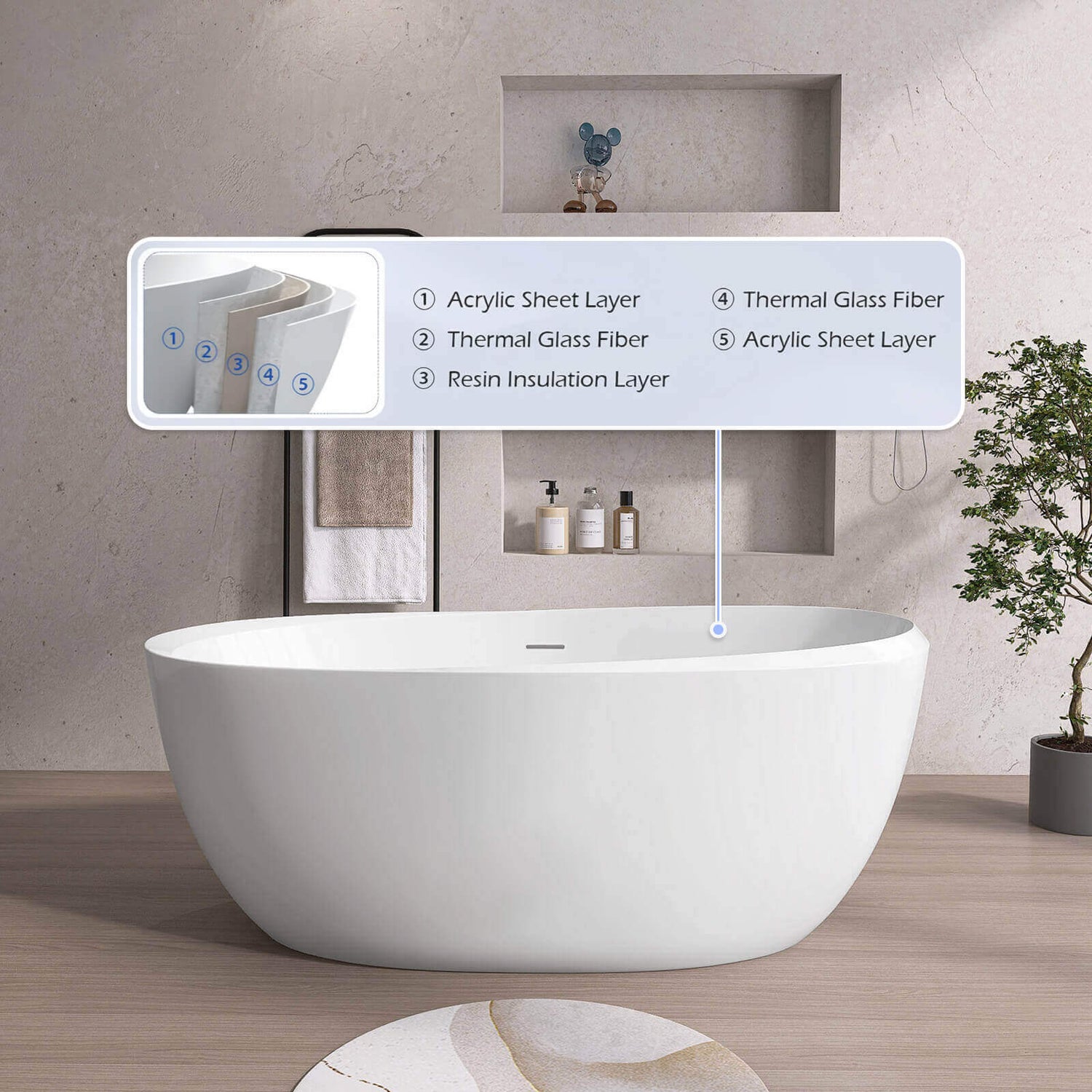
Acrylwanne: Material und Aufbau im Detail
Acryl, wissenschaftlich als Polymethylmethacrylat (PMMA) bekannt, ist ein vielseitiges Material, das für seine Klarheit, Haltbarkeit und einfache Verarbeitung geschätzt wird. Es wird gemeinhin als „organisches Glas“ oder „transparenter Kunststoff“ bezeichnet und in vielen Branchen eingesetzt, insbesondere bei der Herstellung von Badewannen.
Eine Acrylwanne wird aus Acrylplatten hergestellt, die erhitzt werden, um sie weich zu machen, und dann mittels eines Vakuumformverfahrens geformt werden. Im Gegensatz zum Spritzgussverfahren bildet das Vakuumverfahren typischerweise eine Hohlstruktur, wodurch die Wanne leichter, erschwinglicher und besser wärmeisolierend wird. Einige Leute glauben jedoch fälschlicherweise, dass dies die Badewanne weniger haltbar und kurzlebiger macht.
Acrylbadewannen verfügen typischerweise über ein mehrschichtiges Design, wobei jede Schicht eine bestimmte Funktion erfüllt, um Komfort, Stabilität und Haltbarkeit zu gewährleisten. Die äußere Schicht besteht in der Regel aus 3 bis 5 mm dickem reinem Acryl, das die Wanne schützt und ihre Ästhetik verbessert. Unter der äußeren Schicht werden oft ein oder mehrere Verstärkungsmaterialien hinzugefügt, um die Druck- und Stoßfestigkeit der Badewanne zu verbessern und Verformungen im Laufe der Zeit vorzubeugen.
Hochwertige Acrylwannen können auch zusätzliche Stützstrukturen an der Basis aufweisen, wie z. B. dicke Glasfaser- oder Holzverstärkungen, um die Stabilität zu verbessern. Viele dieser Wannen enthalten auch Schaumstoff- oder Isoliermaterialien, um die Wärmespeicherung zu verbessern, sodass die Wanne die Wassertemperatur länger halten kann.
Faktoren, die die Lebensdauer von Acrylwannen beeinflussen, und Lösungen
Material Quality
The lifespan of an acrylic tub is closely tied to the quality of its material. High-quality acrylic materials are often treated to be more crack-resistant and durable, effectively preventing scratches, discoloration, or breakage over time. In contrast, lower-quality acrylic bathtubs may show signs of damage after just a few years, compromising both their appearance and functionality.
With so many acrylic tub brands on the market, it can be hard for consumers to judge which ones offer the best quality. To avoid unnecessary issues, Giving Tree Home recommends choosing reputable brands that specialize in acrylic tubs, ensuring you purchase a product that is reliable and durable.
Proper Usage
While acrylic tubs are quite durable, improper usage can significantly shorten their lifespan. For example, pouring water that is too hot directly into the tub can cause it to warp. The correct way to fill the tub is by adding some cold water first, followed by hot water, which helps prevent excessive temperature differences.
Additionally, impacts from blunt objects can cause scratches or even damage the surface. If scratches appear, they can usually be polished out, though this requires time and effort. More severe impacts could puncture the tub, meaning it will need to be replaced. To prevent this, keep metal items like keys or razors away from the bathtub to avoid accidental scratches or bumps.
Another common mistake is using harsh chemicals or inappropriate cleaners, which can damage the surface. To protect your bathtub, it’s best to use gentle cleaning methods, such as mild dish soap, white vinegar, or baking soda. For stubborn stains, consider using a cleaner specifically designed for acrylic tubs.
Installation Issues
Acrylic tubs are relatively lightweight, so some homeowners may attempt to install them themselves. However, improper installation can result in uneven weight distribution, leading to warping or cracking. To ensure your bathtub’s stability and support, it's always best to have it installed by a professional.
Moreover, avoid installing your acrylic tub near a window. While this might not cause immediate issues, prolonged exposure to sunlight can cause the surface to yellow over time, affecting both the appearance and texture of the tub.
Water Quality
Sometimes, even if you’ve purchased a high-quality acrylic tub and have been using it correctly, you might still encounter issues after a few years. In these cases, the problem may not lie with the bathtub itself or how it's used, but with the water quality. This is particularly true for those living in areas with hard water. Hard water contains a high concentration of minerals, and over time, these minerals can build up as limescale on the bathtub's surface. This not only affects the tub's appearance but can also damage the surface, leading to premature aging.
To extend the lifespan of your acrylic tub, it’s advisable to check the water quality in your area, especially if you live in a region with hard water. If necessary, install a water filter to reduce mineral buildup and prevent limescale from accumulating.
Ende
Indem Sie die Eigenschaften von Acrylmaterial und die Schlüsselfaktoren, die die Lebensdauer Ihrer Badewanne beeinflussen, verstehen, können Sie die richtigen Schritte unternehmen, um sie zu pflegen und sicherzustellen, dass sie über Jahre hinweg in Top-Zustand bleibt. Für detailliertere Informationen zur Lebensdauer von Badewannen lesen Sie unseren Artikel „Wie lange hält eine Badewanne?“, der eine ausführliche Analyse und einen Vergleich der Lebensdauern verschiedener Badewannenmaterialien bietet.
Weitere Ideen
-

What Is a Transparent Bathtub and Is It Worth Buying?
As homeowners look for more distinctive ways to update their bathrooms, bathtubs are increasingly becoming part of the room's overall design rather than simply a functional fixture. Clear, translucent, and...
-

Features That Make a Kitchen Faucet Worth Buying
Short answer: The key features that make a kitchen faucet worth buying include spray pattern options, tall spout height and reach, finish durability, water efficiency, sensor and touch technology, solid...
-

Marble Look Bathtub vs Marble Bathtub: Which Is Right for Your Bathroom?
Bathroom design has become more focused on creating spaces that feel both functional and visually distinctive. Freestanding bathtubs, natural materials, and statement finishes are increasingly used to give the bathroom...
-

New Product Collection Launch: Marble Look Bathtubs
Want to bring a touch of marble-inspired elegance into your bathroom? Giving Tree Home’s new marble look bathtub collection combines sophisticated patterns, modern shapes, and spa-like comfort to create a...
-

How to Choose the Right Bathroom Vanity Mirror Size Correctly
Choosing the right bathroom vanity mirror size is one of the most important decisions in a bathroom renovation, yet it is often made at the last minute. In many projects...
-

Bathtub Overflow Drain: Complete Guide to How It Works and Maintenance
A bathtub overflow drain is an essential safety feature built into most modern bathtubs. Although small and easy to overlook, it plays a vital role in preventing water from overflowing...


